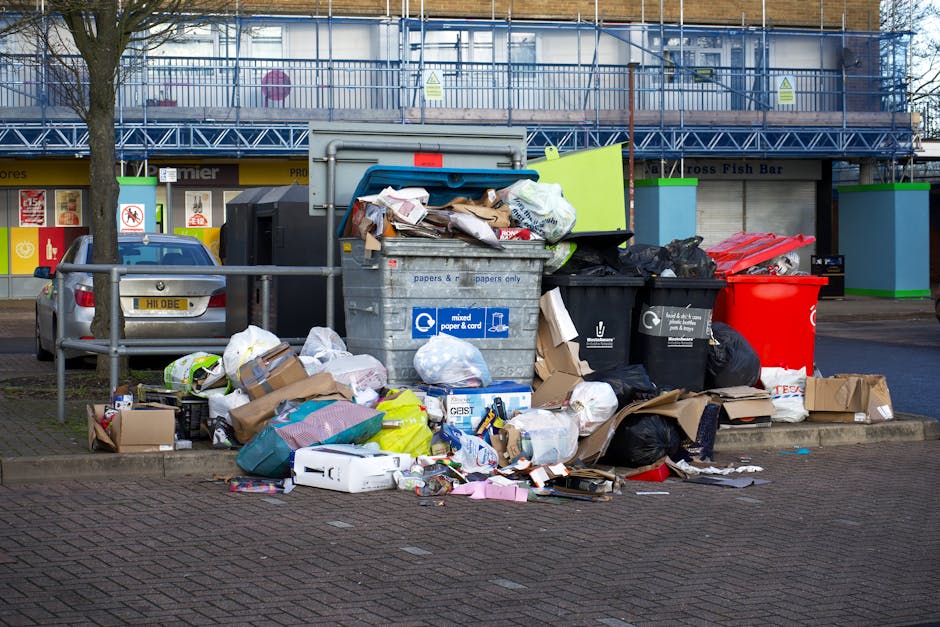
Peckham Rye station rubbish collection for local traders

If you run a shop, cafe, takeaway, kiosk, market stall, or small service business near Peckham Rye station, rubbish quickly becomes more than an eyesore. It affects opening routines, customer first impressions, staff safety, and sometimes even how smoothly deliveries and collections happen. Peckham Rye station rubbish collection for local traders is really about keeping trade waste moving efficiently without letting bags, cardboard, food packaging, or bulky items get in the way of business.
That sounds straightforward, but in practice it can be a bit messy. One trader has folded boxes piling up before the lunch rush, another has a back alley that is always half-blocked, and someone else has confidential paper, old shelving, and broken appliances all needing different handling. This guide breaks down how to manage local trader waste properly, what collection options make sense, and how to avoid the kind of problems that cost time and goodwill. You will also find a simple checklist, a practical comparison table, and a realistic example from a busy trading day.
Expert summary: the best rubbish collection setup for traders near Peckham Rye station is usually the one that fits your space, trading hours, waste type, and turnaround speed. In many cases, that means choosing a method that keeps the frontage clear, reduces storage time, and supports regular recycling rather than just "getting rid of stuff".
Why Peckham Rye station rubbish collection for local traders matters
The area around a busy station has its own rhythm. People pass through quickly, deliveries come at odd hours, and pavements can feel tight even when the street is technically "open". For local traders, rubbish collection is not a background task. It is part of how the business operates day to day.
Near Peckham Rye station, waste can build up fast for a few very ordinary reasons: high footfall, compact premises, limited back-of-house storage, and a constant stream of packaging from stock deliveries. Add food waste, broken display materials, and the occasional refurbishment offcut, and it becomes clear why a one-size-fits-all approach often fails.
There is also the reputation side. Customers notice overflowing sacks, smelly bins, and cardboard blowing around outside a unit. They might not say anything, but they feel it. In a street with competing traders, small details matter. Clean frontage, tidy loading, and dependable pickup are part of the customer experience whether you like it or not.
Then there is the practical risk. Waste left in the wrong place can attract pests, create slip hazards, block access routes, and slow down staff. If your team has to step over rubbish during a rush, that is not just annoying; it is avoidable friction. And let's face it, no trader needs more friction.
For many businesses, the real goal is simple: keep working space clear, keep customers happy, and keep waste moving without making the operation feel like a bin room. That is where a planned collection approach helps. Services such as commercial skip hire, wait and load skip hire, or rubbish removal can each suit different trader setups depending on access and volume.
How Peckham Rye station rubbish collection for local traders works
In most cases, trader rubbish collection is built around three things: what you need to dispose of, how much space you have, and how quickly the waste needs to disappear. Simple in theory. In reality, those three variables decide whether the process is smooth or a headache.
1) Identify the waste stream
Start by separating the common categories. This is where many businesses save time and money. Cardboard, mixed general waste, food waste, packaging film, wood, old fixtures, and confidential paperwork should not all be treated the same way. Some can be recycled. Some should go in a mixed load. Some need specialist handling.
If you are unsure about what can and cannot go together, the page on what can go in a skip is a useful starting point for understanding typical acceptable materials and common exclusions.
2) Choose the right collection method
Local traders usually narrow it down to one of a few approaches:
- Scheduled collection for steady waste volumes.
- On-demand pickup for irregular clear-outs or busy trading weeks.
- Skip-based solutions if space and access allow.
- Wait-and-load if you cannot leave a container on-site.
- Man and van collection for smaller, mixed or awkward loads.
Each one works differently. A cafe with a tiny rear yard may prefer a fast turnaround option. A shop refit may need a larger, time-limited solution. A trader who builds up cardboard every week may prefer something compact and predictable.
3) Arrange access and timing carefully
Access is often the hidden issue. If the vehicle cannot stop safely, or if staff are not ready when the crew arrives, the collection can drag on. That is especially relevant around station areas where traffic, pedestrians, and loading restrictions can make timing a bit fussy.
A good provider will usually ask about access width, parking, loading points, and whether the waste is at the front, rear, or inside the premises. That is not small talk. It is how they avoid delays and keep costs under control.
4) Keep waste segregated where possible
Waste segregation is one of those boring phrases that becomes useful the minute your storage space is limited. Separating cardboard, food packaging, metal, and general rubbish can make collection more efficient and can also support recycling performance. It does not need to be perfect, but it should be deliberate.
5) Confirm handover and disposal
Once collected, waste should be transported and processed through the appropriate route. For traders, this is important not just for tidiness but for traceability and good business practice. Responsible disposal means knowing your waste has been handled properly, not simply vanished into thin air at 7:15 on a Tuesday morning.
Key benefits and practical advantages
Good rubbish collection is not only about removing clutter. It makes the business easier to run. That might sound obvious, but it is worth spelling out because the benefits often show up in small ways first.
- Cleaner customer-facing areas: Less visible waste means a neater frontage and a more professional impression.
- Safer staff movement: Fewer obstacles in narrow corridors, yards, or back entrances.
- Better use of limited space: Important in compact units where every square metre matters.
- Less disruption during trading hours: Fast, planned collections reduce interruptions.
- More recycling potential: Segregated loads can support better recovery of materials.
- Fewer pest and odour issues: Especially useful where food, cardboard, or organic waste is involved.
- Improved compliance habits: Neater waste handling tends to go hand in hand with better record-keeping and fewer oversights.
There is also a quieter benefit: less mental noise. Staff do better when the back area is not full of "we need to deal with this later" piles. You can feel that in a workspace. It is a small thing, but it changes the day.
For traders with mixed waste needs, solutions such as recycling and sustainability services can help turn disposal into a more deliberate process rather than a last-minute scramble.
Who this is for and when it makes sense
Peckham Rye station rubbish collection for local traders makes sense for a wide mix of businesses, especially where footfall is high and storage is tight. It is not only for large retailers or builders. In fact, some of the biggest pressure points appear in small, busy units that generate a little waste every day rather than a huge amount once a month.
This is often the right fit for:
- cafes, delis, bakeries, and food-to-go businesses
- newsagents, convenience stores, and small retailers
- salons, barbers, beauty rooms, and treatment spaces
- offices and co-working units near the station
- market traders or pop-up operators with short trading windows
- landlords and managing agents dealing with end-of-tenancy clear-outs
- fit-out contractors working on small commercial spaces
It can also make sense when a trader has a seasonal spike. Think of a shop clearing packaging after a heavy delivery week, or a venue dealing with extra waste after an event. You do not need a permanent overhaul every time. Sometimes you just need a clean, well-timed removal and a calm reset.
If the job is a bit more project-based, pages such as office clearance, builders waste removal, or construction waste disposal may be more relevant than a standard weekly bin arrangement.
Step-by-step guidance
If you are setting up a cleaner and more efficient rubbish collection routine near Peckham Rye station, the following process keeps things grounded. No drama, just a workable system.
- Measure the waste you already produce. Track how many bags, boxes, and bulky items build up over a normal week. A single busy service day can tell you more than a month of guesswork.
- Identify the main pain point. Is it space, smell, access, timing, or volume? The answer decides the best collection type.
- Separate recyclable material. Cardboard and clean packaging are usually the easiest wins. Start there.
- Decide how often waste must leave site. Daily, weekly, or only after a particular event? Avoid over-ordering by accident.
- Check access before booking. Can a vehicle stop close enough? Is there room to load? Will customers or pedestrians be in the way?
- Match the method to the site. A skip works well on some premises, while others are better suited to wait and load skip hire or man and van collection.
- Set a simple waste routine for staff. Labels, bins, stacking rules, and a final check at closing time can save a lot of bother.
- Review after the first collection. Did the vehicle arrive at the right time? Was the load easy to access? Any bottlenecks? Then adjust.
A useful habit is to keep one person responsible for waste coordination. It does not need to be a management role. Just someone who knows where the bags go, who to speak to, and what to do if the back yard turns into a small mountain by Friday afternoon.
Expert tips for better results
In our experience, the smoothest trader collections are rarely the fanciest. They are the ones with the least ambiguity. The fewer surprises, the better the result.
Keep your waste zones simple
Do not create six different bins if two would do. Complexity sounds organised until busy staff start guessing where things belong. A clean, obvious setup works better than a perfectly designed one that no one follows.
Use time windows, not vague expectations
If your collection can happen before the first customer arrives, say so. If it needs to happen after the lunch rush, say that instead. Around a busy station, timing can matter more than price. Honestly, sometimes ten minutes is the difference between a tidy collection and a faffy one.
Ask about secure options for sensitive waste
If your business handles documents, labels, delivery slips, or anything that should not be left in public view, consider confidential shredding. It is a small detail that can save embarrassment later.
Plan for bulky items before they become urgent
A dead fridge, broken display unit, or damaged sofa-style waiting area furniture should not sit around for weeks because nobody planned the removal. If you know bulky waste is coming, book it early. For appliances and larger items, fridge and appliance removal and mattress and sofa disposal can be more sensible than trying to squeeze them into a general load.
Choose the collection method that protects trading space
Space is premium near a station. If a skip would block access or attract misuse, a locked or enclosed option may be a better fit. Where security matters, enclosed and lockable skip hire can be worth considering.
And one more thing: do not let waste decisions drift into "we'll sort it later". That phrase has derailed many a tidy plan. Waste has a habit of becoming a bigger problem when it is ignored for just one extra week.
Common mistakes to avoid
Most waste issues for traders are not dramatic. They are small oversights that keep repeating. The good news is they are usually easy to fix once you notice them.
- Leaving waste until closing time every day: This causes bottlenecks and makes collections harder to coordinate.
- Mixing everything together: Recyclables, food waste, and general rubbish all thrown in one place can limit your options.
- Underestimating access problems: A vehicle may be booked, but if the loading point is blocked, the whole process slows down.
- Choosing a method that is too large or too small: Too big is wasteful; too small creates overflow and extra hassle.
- Ignoring bulky items: They are the usual culprits that break the system.
- Not briefing staff: If the team does not know the routine, the routine does not exist.
- Forgetting about permits or restrictions where relevant: If you are using a roadside container, you may need to consider skip hire permits or the broader guidance on skip permits.
The most common mistake of all? Treating collection as an emergency service rather than part of business operations. That usually costs more, and it rarely feels calm.
Tools, resources and recommendations
You do not need a huge toolkit to manage trader waste well. A few sensible items and one or two process habits can make a real difference.
- Labelled bins or cages for cardboard, general waste, and recyclables.
- Heavy-duty sacks and ties for consistent bagging and easier handling.
- A weekly waste log to note volumes, trouble spots, and collection times.
- Simple staff instructions posted in the back-of-house area.
- Photo notes for recurring waste issues so you can show exactly what needs collecting.
For traders comparing service styles, the following pages are useful to explore in plain terms:
- skip hire for general container-based disposal
- same day skip hire when the job cannot wait
- skip sizes and prices for choosing a realistic load size
- grab lorry hire for larger or loose loads where access is tricky
- grab hire services for fast removal of bulky material
If your premises are tight and a container would get in the way of trade, a rubbish removal service or wait and load skip hire can keep the site clear without taking over your frontage. That matters more than people think. A tidy entrance can be worth more than a slightly cheaper option that blocks your day.
Law, compliance, standards, or best practice
Waste handling in the UK is not something traders should improvise. You do not need to become a legal specialist, but you do need a sensible working understanding of your responsibilities. The exact rules depend on the waste type, premises, and collection method, so it is wise to stay cautious rather than assume.
At a practical level, traders should aim to:
- store waste safely and securely before collection
- separate materials where reasonable and practical
- avoid placing prohibited items in mixed waste
- use a reputable waste carrier
- keep basic records for business waste management
- ensure staff know how to handle sharp, heavy, or awkward items
If the site has public access, shared entrances, or customer traffic, then safety and presentation matter as much as disposal. Waste should not create a trip hazard or obstruct exits. And if your operation produces items that could be classed as hazardous or specialist waste, do not guess. Use a proper route such as hazardous waste disposal and make sure the handling method fits the material.
There are also business standards to think about, even if they are not formal regulations in every case. Good waste practice usually means predictable timing, clean handling, and clear accountability. That is the sort of thing that helps traders stay calm during busy periods and gives customers a better impression of the whole place.
Options, methods, or comparison table
Different trader setups need different collection methods. The table below gives a simple, practical comparison rather than a glossy sales pitch.
| Method | Best for | Strengths | Potential drawback |
|---|---|---|---|
| Commercial skip hire | Regular or medium-volume trade waste | Useful for ongoing waste, clear disposal route, flexible sizes | Needs space and may require permit considerations |
| Wait and load | Sites with very limited space | No long-term container on-site, quick turnaround | Requires the load to be ready when the vehicle arrives |
| Rubbish removal | Mixed, one-off, or awkward waste | Simple, quick, less site management | Less suitable for continuous waste streams |
| Grab lorry hire | Loose, bulky, or heavier loads | Fast removal, helpful where access is awkward | Not ideal for small daily waste volumes |
| Enclosed or lockable skip | Sites needing security or extra tidiness | Better protection from misuse and weather | May be larger than some traders need |
If you are not sure which route is best, start by asking one simple question: what is the main thing waste is doing to my business right now? If the answer is "taking up space", one solution fits. If it is "blocking access", another fits better. If it is "we only need a quick removal once in a while", then you can keep it lean.
Case study or real-world example
Picture a small food trader near Peckham Rye station on a busy weekday. Deliveries arrive early, packaging stacks up fast, and by mid-afternoon the back area has cardboard boxes, food packaging, a broken shelf, and a few sacks of mixed waste. Nothing dramatic. Just enough clutter to make the team keep stepping around it.
The first instinct is often to keep squeezing everything into the same bin area. That works for a day or two, then it turns into a bottleneck. Staff slow down. The rear door stays half-open. And the whole place begins to feel slightly behind itself.
In a situation like that, the business would usually benefit from a clearer split: cardboard stored separately, mixed waste bagged consistently, and the bulky item removed through a one-off collection rather than left to "deal with later". If access is tight, a wait and load skip hire arrangement may suit the load. If the issue is mostly loose waste after a refit or stock refresh, man and van support can be a neat fit.
The important thing is not the exact service label. It is the effect: a clearer back-of-house area, quicker staff movement, and less pressure at the end of the day. Once that happens, everything feels a little easier. Not perfect. Just easier. And that is often enough.
Practical checklist
Use this checklist before you book or review a rubbish collection plan for a local trading site near Peckham Rye station.
- Have you identified the main waste types your business produces?
- Do you know how often the waste builds up?
- Is there enough space for storage before collection?
- Can a vehicle access the site safely?
- Have you separated cardboard or recyclable items where possible?
- Do staff know where waste should be placed?
- Are any bulky items waiting for removal?
- Do you need a secure or enclosed option?
- Would a one-off service or ongoing collection work better?
- Have you checked whether permits or site rules could affect your chosen method?
- Is the collection time set to avoid your busiest trading period?
If you can tick most of those boxes, you are already ahead of the usual scramble. Truth be told, that alone saves a lot of stress.
Conclusion
Peckham Rye station rubbish collection for local traders works best when it is treated as a practical operating system, not an afterthought. The right approach keeps your frontage tidy, helps staff move safely, and reduces the constant low-level irritation that waste can create in a busy commercial setting.
Whether you need a short-term clear-out, a regular trade waste solution, or something that fits a tight access point, the key is to match the collection method to the realities of the site. Space, timing, waste type, and security all matter. Once those are clear, the decision usually becomes much simpler.
If you are comparing options now, start with the collection method that solves your biggest headache first. That is usually the quickest route to a cleaner, calmer trading day.
Get a free quote today and see how much you can save.
And if nothing else, remember this: a tidy waste routine is one of those quiet business habits that pays you back every single week.
Frequently Asked Questions
What is Peckham Rye station rubbish collection for local traders?
It is the organised removal of business waste for shops, cafes, offices, and other traders working near Peckham Rye station. The goal is to keep waste under control without disrupting day-to-day trading.
Which businesses usually need this type of collection?
Busy local traders such as cafes, convenience stores, salons, takeaways, offices, pop-ups, and small retail units often need regular or on-demand rubbish collection because they produce waste in compact spaces.
Is commercial skip hire always the best option?
No. Commercial skip hire works well in some settings, but tight access, limited frontage, or security concerns may make wait and load, rubbish removal, or a lockable container a better fit.
What if my shop does not have much space outside?
If space is tight, look at wait and load skip hire or rubbish removal. Those methods reduce the need to keep a container on site for long.
Can I mix cardboard, packaging, and general waste together?
Sometimes yes, but it is usually better to separate recyclable cardboard and clean packaging where possible. This can make disposal simpler and may improve recycling outcomes.
Do I need a permit for a skip near the station?
If a skip is going on a public road or another controlled location, permits may be relevant. The safer approach is to check whether skip hire permits or skip permits apply before booking.
How do I handle bulky items like old fridges or display units?
Bulky items are best removed separately rather than left with everyday rubbish. Services such as fridge and appliance removal can be a better fit than trying to cram them into a general waste load.
What should I do with confidential papers or customer documents?
Use a secure disposal route rather than mixing them with regular rubbish. Confidential shredding is a sensible option for sensitive paperwork.
How quickly can waste usually be collected?
That depends on the service chosen, access, and the size of the load. For urgent jobs, same day skip hire may be suitable, but timing still depends on site conditions and availability.
What is the best option for a one-off shop clear-out?
For one-off clear-outs, a flexible service like man and van or a focused rubbish removal booking often makes more sense than setting up a long-term solution.
How can I make collections less disruptive to trading?
Set a fixed time window, keep the load ready in advance, brief staff clearly, and choose a method that fits the site. The less guessing involved, the smoother the collection tends to be.
Where can I check whether a waste item is suitable for a skip?
A good starting point is what can go in a skip, which helps you understand common accepted materials and likely exclusions before you book.
What should I do next if I want a quote?
Gather a rough idea of waste type, volume, access, and timing, then make a booking decision based on what suits your site best. If you want a straightforward next step, you can use book online or review pricing and quotes first.